

Does Hebrew Have a Verb for “Have”? Alternatives to יש Explained
Does Hebrew have a verb for “have”?
How do you say “I have” in Hebrew?
What is the difference between יש and לְהַחְזִיק?
If you’ve asked any of these questions, you have come to the right place. Unlike English, Modern Hebrew does not rely on one single verb for “have.” Instead, Hebrew uses different grammatical structures depending on the type of possession. Understanding these distinctions is essential for accurate, natural Hebrew. Let’s break it down clearly.
If you prefer to watch the video with thix explanation, you can do so here:
1. How to Say “Have” in Hebrew: יש + ל
The most common way to express possession in Hebrew is: יש + ל
He has a foreign passport. יֵשׁ לוֹ דַּרְכּוֹן זָר
This structure expresses existence.
Literally, it means:“There exists to him a foreign passport.”
This is:
everyday language
neutral
conversational
the default way to express possession in Modern Hebrew
2. The Difference Between יש and לְהַחְזִיק
Many learners assume יש is the only option. It isn’t. Hebrew also uses the verb לְהַחְזִיק — but the meaning changes depending on structure.
a) Non-Physical or Status Holding: לְהַחְזִיק בּ
He holds a foreign passport. הוּא מַחֲזִיק בְּדַרְכּוֹן זָר
This does not describe physically holding the passport. Instead, it expresses:
official status
recognized institutional possession
slightly formal or bureaucratic tone
Structure: לְהַחְזִיק בּ + noun. This is common in formal descriptions and official contexts.
Hebrew also uses לְהַחְזִיק בּ for ideological or abstract positions.
He holds that opinion. הוּא מַחֲזִיק בַּדֵּעָה הַזֹּאת
This structure suggests:
maintained position
commitment
firmness
It often implies that the person stands by that opinion. This is another reason why understanding structure is more important than memorizing vocabulary.
(Our weekly lessons give you the exposure you need for long-term progress).
b) Physical Holding: לְהַחְזִיק אֶת
When the meaning is literal and physical, the structure changes.
He holds the foreign passport in his hands.
הוּא מַחֲזִיק אֶת הַדַּרְכּוֹן הַזָּר בַּיָּדַיִם
Here, את marks a direct object. This indicates physical contact. Same verb. Different structure. Different meaning.
4. Legal Ownership in Hebrew: בַּעַל
Sometimes Hebrew does not use a verb at all.
He is a foreign passport holder. הוּא בַּעַל דַּרְכּוֹן זָר
The word בעל signals legal ownership or formal classification.
It appears in:
legal language
bureaucratic contexts
official descriptions
news reporting
It is not conversational, rather "border police talk". Hebrew separates everyday possession from legal status.
5. Official Possession: רְשׁוּת
In formal or administrative language, Hebrew may use a possession structure without a typical verb of “having.”
Drugs were found in his possession. בִּרְשׁוּתוֹ נִמְצְאוּ סַמִּים
This is:
official
legal
report-style language
It is common in police reports and formal documents. Again, Hebrew marks register through structure.
Why Hebrew Does Not Have One Word for “Have”
English uses “have” for:
ownership
physical holding
status
legal possession
abstract beliefs
Modern Hebrew separates these meanings into different grammatical categories.
Instead of one verb, Hebrew uses:
existential structure
verb + preposition
direct object marking
nominal classification
formal possession expressions
This makes Hebrew more structurally precise.
Summary: How Hebrew Expresses Possession
Modern Hebrew distinguishes between:
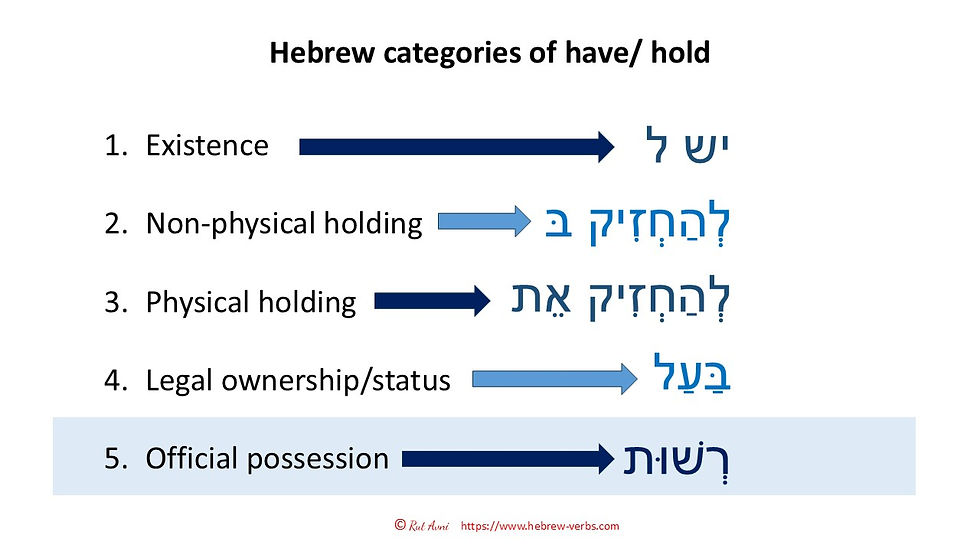
Each structure carries a different nuance. Learning these differences helps you move from basic Hebrew to accurate, natural Hebrew.
Frequently Asked Questions
Does Hebrew have a verb for “have”?
No. Hebrew does not have a direct equivalent of the English verb “have.”Instead, it uses existential and structural patterns.
What is the Hebrew verb for “have”?
There is no single verb.The most common structure is יש + ל.
What is the difference between יש and לְהַחְזִיק ?
Expression of existence: יש
Expression of holding (physical or abstract): לְהַחְזִיק
How do you express ownership in Modern Hebrew?
Ownership can be expressed through:
Existence → יש ל
Non-physical holding → להחזיק ב
Physical holding → להחזיק את
Legal ownership/status → בעל
Official possession → רשות

